How Fluorite Crystals Are Formed: Nature’s Recipe for a Truly Magical Stone
Fluorite is one of nature’s most vibrant and visually captivating minerals. Its striking bands of purple, green, blue, and clear layers make it a favorite for collectors, designers, and artisans—especially in luxury décor pieces like stone lamps, wall panels, floor lamps, and carved bowls. But how does such a beautiful crystal form, and where does it come from?
Let’s explore the geological journey behind every fluorite piece that eventually becomes a glowing element in your home—beginning in the mountains of Mexico, where some of the world’s richest fluorite deposits are found.
1. Born Deep in the Earth
Fluorite formation starts far below the Earth’s surface, where mineral-rich waters move through fractures and cavities in rocks. These waters—heated by geothermal activity—carry dissolved calcium and fluorine. When temperature and pressure conditions align, these elements combine to create calcium fluoride, the base mineral of fluorite.
Mexico’s geological environment provides ideal conditions for this process, producing fluorite known for its exceptional clarity and bold, saturated colors.
2. Hydrothermal Magic: How the Crystals Grow
Most fluorite crystals form through hydrothermal deposition:
-
Hot, mineral-laden water circulates through underground cracks.
-
As it cools, it begins to drop minerals out of solution.
-
When calcium-rich and fluorine-rich fluids meet, fluorite begins to crystallize.
-
Over thousands to millions of years, these crystals grow into large, colorful masses.
In the fluorite quarry and cave system in Mexico where we harvest our stone, these hydrothermal veins can stretch deep into the mountain—creating impressive natural formations that yield the large blocks needed for architectural and décor-quality pieces.
3. The Secret Behind Fluorite’s Colorful Layers
One of fluorite’s most captivating features is its color variety. These hues come from:
• Trace minerals
Elements like iron or rare earth metals tint the crystal.
• Natural radiation over time
This influences structural changes that result in greens, purples, and blues.
• Zoned growth
Fluorite forms layer by layer, often trapping different elements at each stage.
These bands of color are especially striking when illuminated from within, making fluorite ideal for lamps and lighted décor.
The fluorite from Mexico is particularly famous for its deep purples and vibrant green-and-purple banding—qualities that shine beautifully in lighting pieces.
4. From Cave to Craftsmanship
Once harvested from our quarry and cave in Mexico, the raw fluorite is brought out as large, workable blocks. These can then be:
-
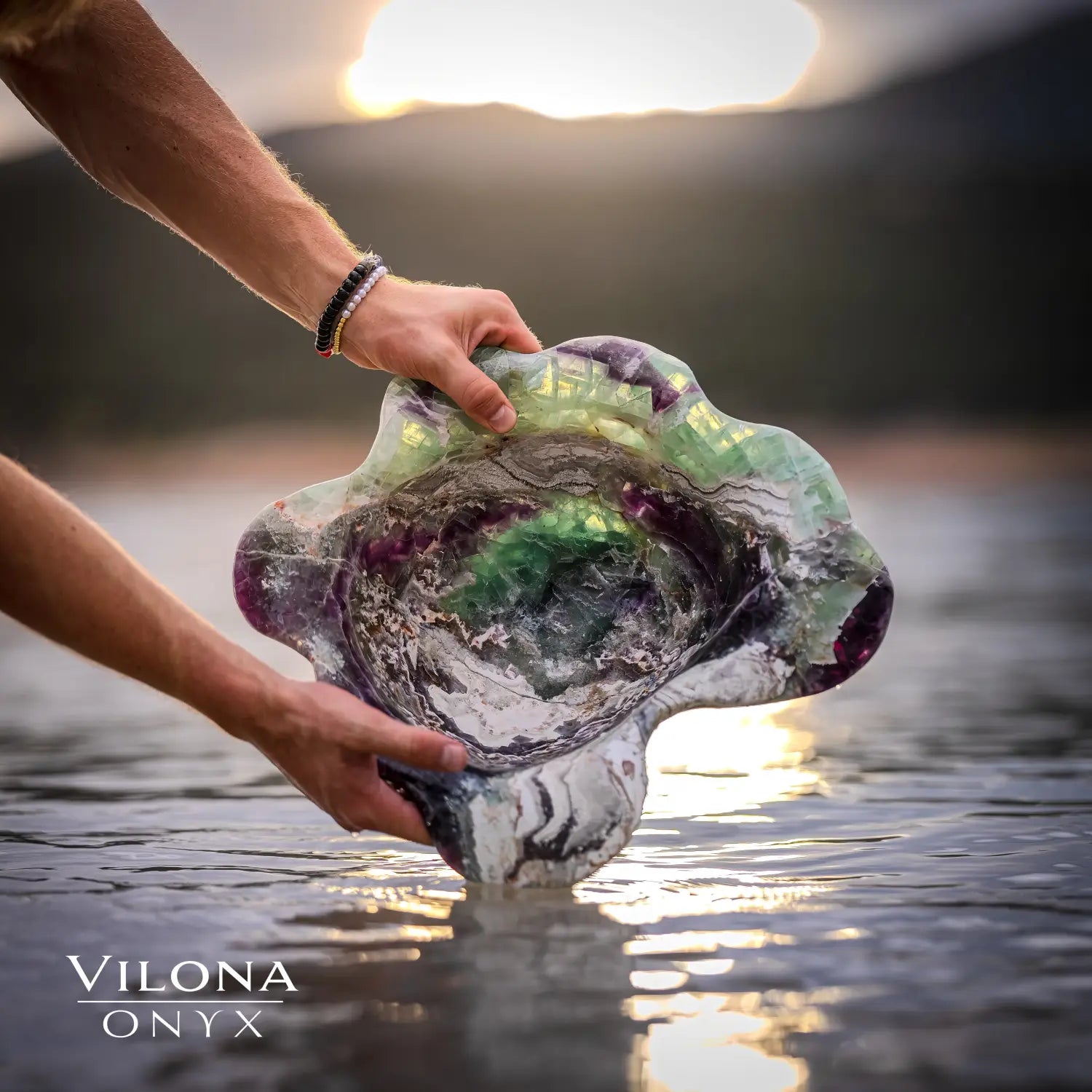
Carved into bowls and vessels
-
Cut into translucent wall panels
-
Shaped into glowing lamp bodies and floor lamp pillars
-
Polished into intricate décor pieces
Fluorite’s natural translucency allows light to pass through in a soft, ethereal glow—showcasing the stone’s banding and colors like stained glass.
5. A Journey Millions of Years in the Making
Every fluorite piece used in high-end décor has traveled an incredible path:
-
Forming deep underground in hydrothermal veins
-
Growing in layered, colorful bands over millennia
-
Resting in the caves of Mexico until discovery
-
Being shaped by skilled artisans into functional works of art
This fusion of ancient geology and modern craftsmanship is what makes fluorite such an extraordinary material for lighting and home décor.